Amanita subjunquillea (East Asian death cap) — Poisonous Mushroom
Korean name: 개나리광대버섯
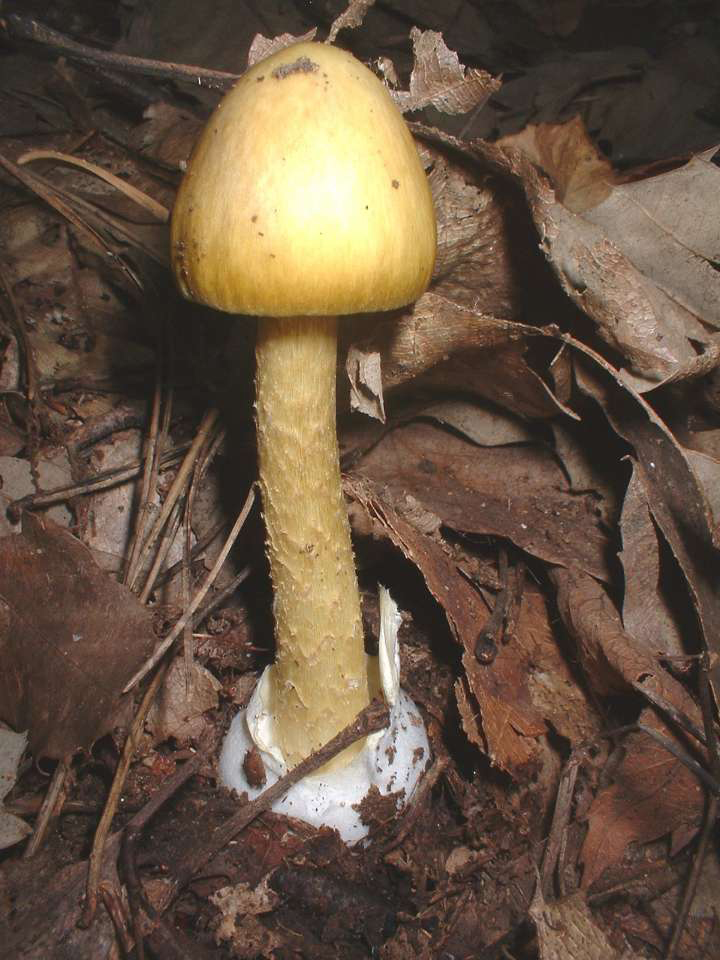
A deadly mushroom with a yellowish cap. It is one of the leading causes of fatal mushroom poisoning in Korea and is dangerous when mistaken for edible species.
Key facts
- Category: Poisonous mushroom
- Toxicity: Poisonous — do not eat. Keep children and pets away.
- Native to: Korea, Japan, China
- Traits: Deadly, Yellow, Amanita, Amatoxin, Common in Korea
- Also known as: East Asian death cap
Toxicity
Can be fatal to pets
- Dogs: Fatal
- Cats: Fatal
- Horses: Not confirmed
- Humans: Fatal
- Risky parts: 자실체 전체
- Toxic compound: 아마톡신
- Source: 농촌진흥청 국립원예특작과학원 버섯정보포털 — 독성정보(독소별 중독·혼동 식용버섯) · checked 2026.11
- Source: 산림청 국립수목원 — 가을철 독버섯 주의 보도자료 · checked 2026.11
Any plant can upset the stomach if eaten in quantity. This information is for reference only — contact a vet or doctor right away if you notice symptoms.
Toxicity, identification & first aid
- Toxic symptoms: Contains amatoxins. Symptoms follow the same course as the destroying angel. Can cause fatal liver and kidney failure; the fatality rate is very high.
- Appearance: Cap 3–8 cm, yellow to yellow-brown. White stem with a cup-shaped volva at the base.
- Where found: Broadleaf forests, especially around oaks, in mountains nationwide.
- Season: Summer to autumn (July–October)
- Look-alike warning: Yellow Caesar-type Amanitas (edible) and chanterelles (edible, yellow).
- Emergency action: Call emergency services (119 in Korea) and go to the ER immediately. Do not induce vomiting. Amatoxins are hard to remove even with dialysis.
Common questions
Can you eat Amanita subjunquillea?
No. Amanita subjunquillea is poisonous. Contains amatoxins. Symptoms follow the same course as the destroying angel. Can cause fatal liver and kidney failure; the fatality rate is very high.
What does Amanita subjunquillea look like and where does it grow?
Cap 3–8 cm, yellow to yellow-brown. White stem with a cup-shaped volva at the base. Broadleaf forests, especially around oaks, in mountains nationwide. Summer to autumn (July–October)
What can Amanita subjunquillea be mistaken for?
Yellow Caesar-type Amanitas (edible) and chanterelles (edible, yellow).
What should you do if someone eats Amanita subjunquillea?
Call emergency services (119 in Korea) and go to the ER immediately. Do not induce vomiting. Amatoxins are hard to remove even with dialysis.