Trichoderma cornu-damae (Poison fire coral) — Poisonous Mushroom
Korean name: 붉은사슴뿔버섯
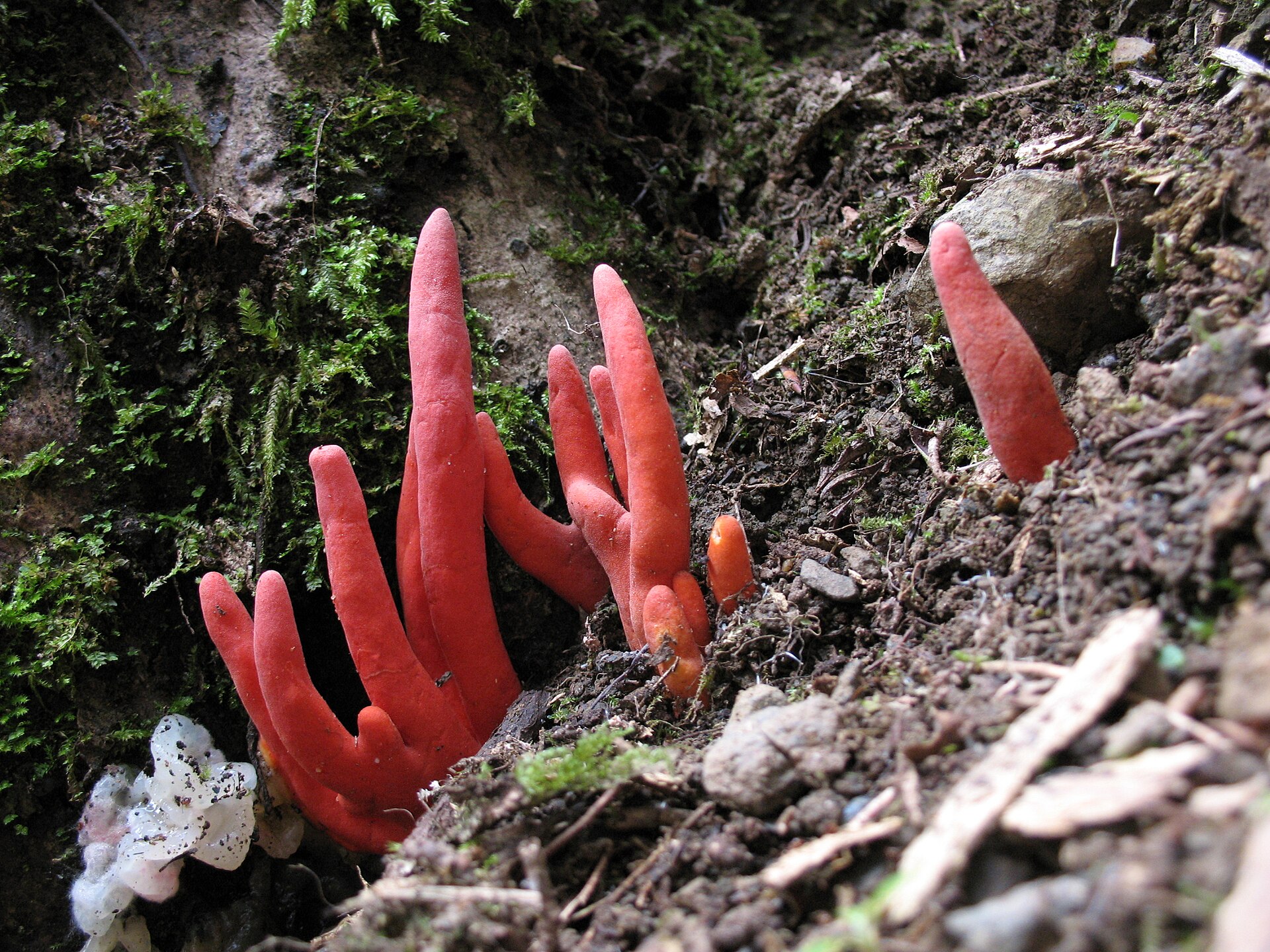
An extremely poisonous fungus with red, antler-shaped fruiting bodies. Even touching it can irritate the skin, and eating it can be fatal.
Key facts
- Category: Poisonous mushroom
- Toxicity: Poisonous — do not eat. Keep children and pets away.
- Native to: Korea, Japan, East Asia
- Traits: Extremely toxic, Contact toxin, Red, Antler-shaped, Mycotoxin
- Also known as: Podostroma cornu-damae, Poison fire coral
Toxicity
Can be fatal to pets
- Dogs: Fatal
- Cats: Fatal
- Horses: Not confirmed
- Humans: Fatal
- Risky parts: 자실체 전체
- Toxic compound: 트리코테신
- Source: 농촌진흥청 국립원예특작과학원 버섯정보포털 — 독성정보(독소별 중독·혼동 식용버섯) · checked 2026.11
- Source: 산림청 국립수목원 — 가을철 독버섯 주의 보도자료 · checked 2026.11
Any plant can upset the stomach if eaten in quantity. This information is for reference only — contact a vet or doctor right away if you notice symptoms.
Toxicity, identification & first aid
- Toxic symptoms: Contains trichothecene mycotoxins. Eating it causes nausea, vomiting, stomach pain and neurological symptoms; touching it causes dermatitis. Severe cases lead to multiple organ failure.
- Appearance: 3–10 cm tall, red to orange-red, coral- or antler-shaped. Irritates the skin on contact. Typically bright scarlet.
- Where found: On dead broadleaf wood or buried wood, mainly in lowland forests.
- Season: Summer to autumn (July–October)
- Look-alike warning: Reishi (brown, shelf-shaped) and lion's mane (white, shaggy).
- Emergency action: Call emergency services (119 in Korea). Never touch it with bare hands; if you do, wash immediately with soap. Go to the ER.
Common questions
Can you eat Trichoderma cornu-damae?
No. Trichoderma cornu-damae is poisonous. Contains trichothecene mycotoxins. Eating it causes nausea, vomiting, stomach pain and neurological symptoms; touching it causes dermatitis. Severe cases lead to multiple organ failure.
What does Trichoderma cornu-damae look like and where does it grow?
3–10 cm tall, red to orange-red, coral- or antler-shaped. Irritates the skin on contact. Typically bright scarlet. On dead broadleaf wood or buried wood, mainly in lowland forests. Summer to autumn (July–October)
What can Trichoderma cornu-damae be mistaken for?
Reishi (brown, shelf-shaped) and lion's mane (white, shaggy).
What should you do if someone eats Trichoderma cornu-damae?
Call emergency services (119 in Korea). Never touch it with bare hands; if you do, wash immediately with soap. Go to the ER.